


La mítica càmera Zero Image 2000 en plana acció a Osor
La feliç fatalitat
La setmana passada vaig fer un tomb pel centre de Barcelona per distribuir uns volants del projecte 112 Revelats als comerços dedicats a la fotografia —Fotoboada, Foto Casanova, Cameras & Films, Fotok, etc.—. I va ser a Fotoboada on, gairebé sense voler, vaig veure un parell de capses de cartró amb una etiqueta que mostrava el dibuix d’una càmera de fusta rectangular i el text Zero Image. Merda estic perdut!, vaig pensar.
Soc un apassionat de la fotografia estenopeica (també anomenada pinhole pels més “cool”) i aquesta marca de càmeres és una llegenda entre els sonats que fem fotografies amb aquesta ancestral tècnica fotogràfica.
En David, que és un bon amic i regenta aquesta històrica botiga de fotografia analògica del carrer Tallers, no sabia que aquell matí hi passaria; si no, sospitaria que havia deixat aquella càmera sobre el taulell expressament per fer-me feliç. És un dels meus camells principals per satisfer els meus vicis fotogràfics.
El consol pels que som addictes a aquesta mena de fotografia és que els preus no són com els dels darrers models digitals. A més, no calen piles i el manteniment és pràcticament inexistent.
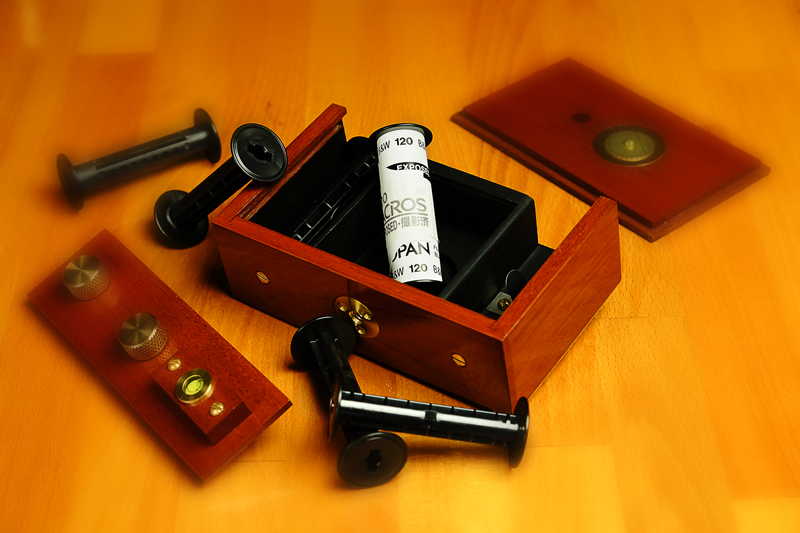
La càmera i la seva història
Zero Image 2000 – Característiques principals
- Format: 6×6 cm (film de 120)
- Angle de visió: equivalent a un 35 mm aproximadament en format 35 mm
- Obertura (pinhole): f/138
- Material: fusta de teca natural amb detalls en llautó polit
- Mecanisme d’avanç: manual, amb finestra vermella al darrere per veure el número del rodet
- Pes: molt lleugera (uns 250 g)
- Muntatge: completament manual, sense cap component electrònic ni òptic tradicional
L’ocasió perfecta
He de confessar que no vaig poder-me estar de carregar la Zero el mateix dia que la vaig comprar, i l’endemà ja n’havia revelat els resultats. Tot i això, només era una prova per comprovar-ne el correcte funcionament, no una estrena oficial.
Però aquest passat 15 d’octubre vaig fugir de Barcelona per copsar els tons de la tardor. L’amic Manel em va portar a conèixer la zona del pantà de Susqueda, i sabia que seria una excel·lent ocasió per gaudir per un forat amb la nova adquisició.
Ell sap com ningú que per fer fotografies cal paciència, calçat còmode i els níguls ben posats. És un gust compartir passió amb ell que el considero un bon mestre.
El rodet, el gran dilema
Soc un xic cagadubtes a l’hora de prendre decisions i, quan surto a fer fotografia per gust, canvio més d’un cop les càmeres que portaré, el tipus de rodets, si duré trípode o no, etc. Un desastre!
Però per aquesta sortida em vaig decidir per la fantàstica Rollei RPX 25, una pel·lícula amb un gra molt fi i de baixa sensibilitat, ideal per treballar amb exposicions llargues.
La seva baixa ISO permet fer fotografies de més de 30 segons en la majoria d’ocasions, i això dona temps i calma per treballar. En aquest tipus de fotografia, obrir i tancar l’obturador és una acció totalment manual, i això complica calcular, posem per cas, una captura d’un o pocs segons. En aquests casos, el marge d’error és molt més gran que si fem una exposició de 30 o més segons: un segon d’error dins de 30 és gairebé imperceptible; un segon d’error dins de 5 és temerari. No sé si m’explico.
Com utilitzar la Zero 2000?
El funcionament d’aquesta càmera, com la majoria d’aquest tipus, és força senzill:
Col·locació del rodet. Amb cura, traiem el rodet de 120 de la seva caixa i del paper metàl·lic que el protegeix de la llum. Desmuntem el cargol central per retirar la tapa superior. Un cop fora, retirem també la part posterior per col·locar el rodet a la banda dreta, la que no té el cargol de bobinat. A l’altre costat ja hi ha l’ànima de 120, que serà la que —amb el cargol de bobinar— recollirà la pel·lícula a mesura que disparem.
Un cop el rodet és al seu lloc, trenquem la cinta que el subjecta i dobleguem la punta del paper protector per enfilar-la fins a l’ànima. Fem un parell de voltes per assegurar-nos que gira bé i tanquem, amb paciència i cura, primer la part posterior i després la superior, fent coincidir el cargol de bobinat amb els forats de l’ànima de 120.
Amb la càmera ben tancada, anirem bobinant lentament mirant pel petit forat vermell del darrere. Hi veurem passar símbols i fletxes, i després un punt petit, un de més gran… Senyal que cal anar a poc a poc. Quan aparegui el número 1, ja estem llestos!
Tingueu present que no permet rebobinar, així que si us passeu, malament: o perdreu una fotografia, o haureu de desmuntar la càmera a les fosques i tornar a bobinar. Una murga!
Ara sí, l’andròmina està llesta per fer la nostra primera fotografia estenopeica. Ah, i aquesta càmera porta també una mena de plàstic que ajuda a intuir l’enquadrament, però observeu que l’estenop (el forat per on entra la llum) no està centrat, sinó lleugerament desplaçat a la dreta, des del punt de vista natural de disparar.
Càlcul de temps d’exposició
Per calcular el temps correcte, podeu fer servir un fotòmetre convencional o una aplicació mòbil i fer la conversió, ja que la majoria de fotòmetres no arriben a diafragmes tan tancats com f/138.
Jo acostumo a utilitzar l’app Pinhole Assist, que, amb una mica de sentit comú, m’ha donat bons resultats.
Però si voleu ser més puristes —o senzillament passeu del mòbil—, podeu calcular-ho així:
- Mesureu amb el fotòmetre a un diafragma disponible (per exemple f/16).
- Calculeu la diferència de passos entre f/16 i f/138. És aproximadament 6 ⅔ passos més tancat.
- Multipliqueu el temps corresponent. Exemple: Si el fotòmetre indica 1/125 s a f/16, llavors: 1/125 × 2⁶·⁷ ≈ 0,8 segons → però cal afegir-hi correcció per reciprocitat si useu pel·lícula.
Els primers resultats
No és la meva primera càmera estenopeica —en tinc unes quantes—, i continuo pensant que és més emocionant fer-se-les un mateix, de forma artesanal (faig tallers regularment per ensenyar-ne com fer-ne). Però també fa goig tenir una petita col·lecció d’andròmines precioses, totes amb estenops de gran qualitat i resultats ben suggeridors.
Veient els resultats obtinguts a l’exterior —es nota la precisió de l’estenop—, la comoditat de la mida, el format 120 de 6×6, que m’encanta, els materials nobles i ben acabats (la fusta de teca) i la seva història… penso que he fet una molt bona compra.
Feu clic sobre la següent imatge per veure l’àlbum complet de l’estrena de la bonica Zero 2000.

El fabricant — Zero Image
Origen i fundació
Zero Image és una empresa amb seu a Hong Kong dedicada a la construcció artesanal de càmeres estenopeiques de fusta.
Va ser fundada l’any 1999 per un entusiasta del pinhole, Zernike Au.
La seva visió era preservar la tecnologia primitiva de la fotografia —la simple finestra— i mantenir-la accessible com a forma artística.
Materials i procés de fabricació
Zero Image utilitza fusta de teca d’alta qualitat i peces de llautó polit per als detalls metàl·lics.
El procés és totalment manual i extremadament curós: segons la seva descripció, cada càmera rep més de 20 capes de vernís o pintura aplicades a mà, amb polit entre cadascuna.
El temps de producció, des de la fusta en brut fins a la càmera acabada, pot superar un any per unitat.
Cada càmera porta un número de sèrie i sovint un certificat d’autenticitat.
Disseny i filosofia
Zero Image promou les càmeres estenopeiques no només com a eines fotogràfiques, sinó com a objectes d’art.
El nom “Zero” evoca la idea de tornar a l’essència: sense lents, sense components complicats —només la llum i la superfície fotosensible.
A la seva web, descriuen la fotografia estenopeica com una manera de preservar l’herència primigènia de la fotografia, fent present aquella senzillesa en el món modern.
Producció i distribució
Les càmeres es fabriquen a Hong Kong però es distribueixen arreu del món, principalment en botigues especialitzades i col·leccions d’autor.
També s’han fet edicions limitades, com la versió Deluxe, amb accessoris com nivell de bombolla, adaptador per a cable disparador o visors especials.
Reconeixement i recepció
En fòrums i blogs especialitzats, Zero Image és considerada una marca de referència per la qualitat constructiva i la bellesa artesanal dels seus models.
Tot i les seves limitacions òptiques —la difracció, la suavitat, la manca de visor precís—, la seva Zero 2000 és sovint descrita com una càmera amb ànima.
Segons Camera-wiki, va existir una edició limitada de 2000 unitats, tot i que no s’ha confirmat si això és una dada real o una estratègia de màrqueting.